
The Importance of Inspecting Trees to Prevent Hazards to Your Home – Our Guide

,

Trees may seem harmless upon first glance. You may not notice them every day, but trees are vital to your surroundings and are visual points of interest. Investing in the care of trees is highly beneficial for the community as they give environmental benefits and add beauty to the community, but failing to evaluate a tree’s condition can present liabilities and risk for your family and community. 

Why is Tree Maintenance Important? 

For one, trees that are placed close to a property can be a potential hazard to both personal and public safety. Landowners and homeowners alike are responsible for assessing the tree to maintain its upkeep. 

That means if you spot any defective part of a tree, it’s your duty to hire a professional arborist to nip the problem at its bud. After all, any structural failure from a tree can lead to personal injury or property damage, both of which can burn holes in your pocket. 

What Makes a Tree Hazardous? 

A tree can fail due to decay, old-age, or natural disasters causing pieces of it to fall off. However, it becomes most hazardous when there is a valuable target involved such as a structure, vehicle, or person. The directness of the target changes the degree of the risk, which also influences the corrective treatments that follow. 

A tree can also pose a threat if it blocks the vision of drivers, obstructs pathways, interferes with utilities or signs, or has roots causing issues with its surroundings (like raising sidewalks). This can be a hazard to the routine activities of people, which is why regular inspection is crucial to prevent possible risks occurring on properties or to people that are near the tree. 

What Causes a Tree to Fall? 
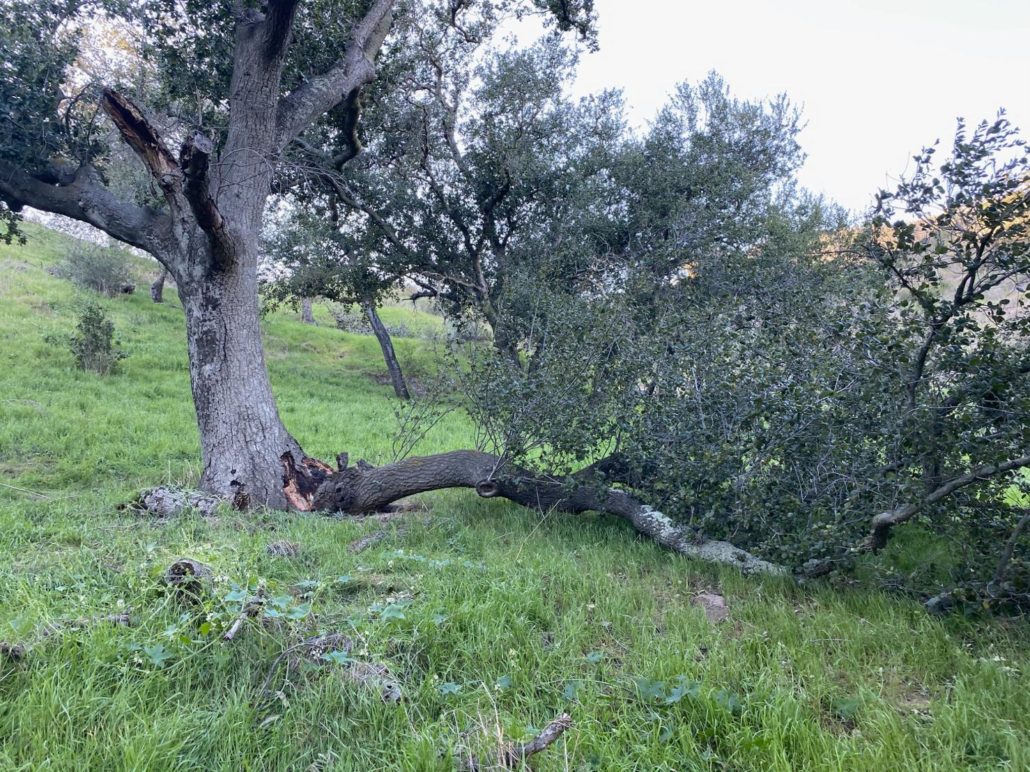
High winds and decay are a recipe for failure.

A tree that has partially fallen.

There are tree failures that are easily predictable, though most risks can be mitigated by keeping watch for any red flags. Pay attention to the following while you are inspecting your trees: 

Tree Health – You can foresee any structural problems by taking a closer look at the tree’s overall health. This includes the foliage color, foliage density, signs of infection, and it’s vigor. Some serious, tell-tale signs of a dying tree include large, dead branches, thin leaf coverings, oddly-shaped leaves, and fungus all over the bark. 

Tree Defects – Be sure to inspect the tree for any defects by thoroughly checking the crown and trunk down to the roots. A clear indication of a potential hazard is if there are dead branches along the tree’s crown, which are commonly called widowmakers. It’s an ominous name that serves as a warning to passers-by as defects can cause branches to fall even on a clear and calm day. 

Other signs that indicate impending issues are cracks and splits along the tree’s trunks. Root rot is one of the most important factors to consider, so be extra vigilant on inspecting the base of the trunk for any evidence of root defects like cracking, heaving soil, or growing mushrooms. 

Improper Pruning – Poor pruning techniques can weaken branches, which can lead to a decline of the tree’s health. 

Site Conditions – The planting location plays a significant role in a tree’s health as any construction within the tree’s root zone can compromise its ability to support the weight of the entire tree. 

Targets – These refer to the potential damage to valuable targets like people and property. A tree placed over a playground, near a sidewalk, or next to a driveway are samples of high-risk targets. 

Keep in mind that tree inspection is highly recommended before and after storms, heavy snowfall, flooding, and other natural calamities. 

Other Factors to Consider When Inspecting for Tree Failure 

For a more in-depth guide on what to consider when inspecting trees, refer to the table below: 

Site ConditionsBiotic and Abiotic FactorsHuman Activity
Depth of bedrockPathogens or diseases presentNearby tree removal
Soil typeInsect activity and severityExcavation removal of roots
Direction of prevailing windsDrought or flood effectsPaving obstructing roots
Erosion near the treeTree community makeup nearbyPoor pruning practices

Wind, storm, flood damagesInjuries due to mowers, car accidents, etc. 

Why You Should Rank Tree Defects

Ranking the severity of the tree’s condition can help you have a clearer picture of its overall health. This will allow you to determine the next best course of action to take – whether it just demands maintenance or complete removal. 

HighModerate
Cracks with decayCallus closing crack
Cracks with callus formingV-Shaped branch union with upturned bark
In-rolled bark widening the crackAny branch with up to 66% of side branches dead
4″ diameter or larger branch with crackBranch with a sharp bend
Two or more cracks in the same trunk or branchLopsided or unbalanced crown, especially if nearby trees were pruned or removed in the last ten years. 
Crack that allows independent movement on either side of the crack
V-shaped branch union with in-rolled bark
Cankers and rot with conks of shelf fungi
Cankers affecting more than 50% circumference
Canker connected to a crack
Dead tree
Dead branch
More than 50% of the root system severed within the drip line
Tree leaning > 45%
Learning tree with any defect on the trunk below the first branch above the ground

This should clue you in on the magnitude of the problem and help you reach the necessary measurements for mitigating the hazards. 

In Conclusion

Inspecting trees and foretelling any future hazard is an art and science. It takes a keen eye, proper training, experience, and the right tools to safely assess the health and condition of a tree to minimize the risk of fall damage and injury. 

That’s why assessing tree hazard is best left to the hands of a professional arborist. They have a deeper knowledge of tree biology and physiology, which supports their ability to evaluate the tree structure and its decay process. With all that combined, they can easily determine the tree’s growth pattern, its history, and how other environmental factors influence the tree’s integrity. 

Understanding the process behind tree hazard inspections can also help you spot red flags yourself. This will help you prevent any complications from growing out of hand as you can determine the best time to call a professional to cut the potential risks at its roots.

If you’re looking for a qualified tree risk assessor in Orange County, get in touch with us today to see how we can help.

10 Practical Tips in Choosing a Qualified Arborist – Our Guide

,

Taking good care of your surrounding trees is paramount to maintaining their health and extending their lifespan. When doing so, professional tree services are at times required because you may not be able to do it on your own.

Whether it’s tree watering, trimming, pruning, or even emergency tree removal, hiring an expert can make a significant difference in the growth and health of your trees. If you are thinking that your trees may need some work, it’s time to look into a qualified arborist.

The decision to look for an arborist shouldn’t be taken lightly. If you don’t do your research, you could end putting both your landscaping and the person performing the work at risk. An unqualified person may not have sufficient insurance or may not have the proper knowledge, skills, and training required to carry out the tree services required.

It’s best to work with a tree care company that is licensed, and insured. While you look for a registered and licensed firm that complies with the state requirements, you should also consider their guarantee of quality work and the additional services offered. 

That said, below are ten practical tips you can use for selecting a qualified arborist:

1. Check for ISA certified arborist credentials

Look for an arborist who has a membership with professional organizations, such as the International Society of Arboriculture (ISA). This membership requires the arborists to demonstrate a commitment to quality and keep up with current best practices on trees and tree care. You can rest assured that ISA-certified arborists have passed the ISA’s extensive examination on all aspects of tree care and maintenance. 

2. Obtain valid references.

When you have several prospective arborists, make sure to get valid references from them. Once you have these references, make sure to validate them. You can contact the listed character references and inquire about their services and level of expertise. Because you want to hire an expert for the preventive care of your trees, you have to make the right decision to ensure the overall health of your trees. Also, don’t forget to check Yelp and Google My Business for reviews.

3. Get estimates from more than one tree care firm.

Apart from references, you should look to obtain estimates from your list of prospects. After examining the credentials of the firms and their staff, make sure to check the specifications of the submitted bids as well. When looking at the specs, determine which proposal has the best combination of cost, scope of work, skill, and professionalism. In the end, the investment in your trees lies in the hands of the tree service provider. This is why you should opt for a highly knowledgeable and reputable tree service company!

4. Never rush when promised with a discount.

Know that there are a wide range of discounts being offered by some service providers. Chances are, you will immediately take the plunge when provided with a discount. Keep in mind that you should never rush in making a decision to hire an arborist. First, make sure to understand the work that needs to be done, the cost of the services, and what the discount entails. Although you will want to take advantage of a discount, this shouldn’t come at the expense of the quality of their work.

5. Veer away from arborists doing excessive pruning.

It’s worth knowing that expert and knowledgeable arborists won’t recommend topping a tree or other drastic pruning practices. These practices might actually injure the trees or make them hazardous. If they offer excessive pruning, it is best that you do not hire them. Reputable arborists usually recommend various options appropriate for your tree conditions and situations.

6. Don’t allow arborists to climb your trees using spikes.

When looking for an arborist, make sure to avoid arborists who use spikes or spurs when tending to the tree. Know that tree-climbing spikes or spurs can actually wound the trees and open a pathway for diseases and insects. These can lead to the weakening of trees or, worse, their death. 

7. Be wary of door-knockers, flyers, or cold calls.

When looking for a tree service provider, you should hire an expert in the field or industry. Know exactly what you want and what kind of tree services you need and verify the firm’s area of specialization as well. In the end, choose a reputable tree service company that can ensure that your trees will get the care they need to remain safe and beautiful for a long time. In short, always check references and reviews.

8. Invest in an arborist with a fair market rate.

Proper tree work is not necessarily inexpensive, but it’s best to invest in a tree service company providing a fair market rate. Reputable arborists are licensed, insured, and maintain expensive, specialized equipment. This is why the standard cost is a fair rate. Beware, however, of exceptionally low estimates as you may not receive quality services. This is also why it is important to look at multiple bids, so you can get a feel for the market.

9. Check and get proof of insurance and license.

It’s best to check and obtain proof of insurance and licenses from the service provider you plan to work with. The license should indicate that it’s registered while in compliance with the state requirements. Furthermore, the certificate of insurance should detail worker’s compensation and general liability in the event of personal property damage. 

10. Never hire the cheapest estimate.

It’s a rule of thumb that you should not hire a service provider with the cheapest estimate. Extremely low estimates can be an indicator of poor professionalism, lack of credentials, such as insurance, and may even have hidden costs. Make sure that you do your best to stay away from such offerings!

There is a wide range of tree service companies available in the market. Before hiring a service provider, make sure to get detailed information about the company and consider the valuable tips outlined above. 

If you’re looking for a certified arborist in Orange County, get in touch with us today to see how we can help.
The Importance of Hiring a Qualified Arborist for Tree Services

,

Trees are a vital part of our ecosystem. Not only do they provide us with oxygen to breathe, but they add beauty and elegance to any outdoor space. Investing in the care of trees for your property can provide substantial returns for your community. 

Maintaining beautiful and healthy trees brings forth ecological benefits. On the other hand, leaving them unkempt can turn them into a liability and a potential hazard. 

Caring for trees can be quite different than caring for shrubbery or flowers. Trees—whether you are pruning or removing—require back-breaking effort and can be dangerous for untrained individuals. 

It takes special equipment as well as industry knowledge to properly care for trees. A lack of skill and experience can endanger the person performing the work. For that reason, hiring an arborist is essential to keep up the visual appeal, health, and structural soundness of the trees in your community. 

Tree

What Arborists Can Do for You

By definition, an arborist is a certified individual who is trained in the science and art of caring for, maintaining, and planting individual trees. When looking for a certified arborist, be sure to look for one accredited by the International Society of Arboriculture (ISA) (like us here at Monarch) or a member of the Tree Care Industry Association (TCIA). To that end, here are some services that arborists can offer:

1. Tree Pruning 

A certified arborist will know how and when to prune trees. It may seem like a simple task, but incorrect procedures will only compromise the health of the tree. Additionally, an arborist has the knowledge to identify the type of pruning method necessary to enhance the appearance, overall health, and safety of the trees.

Professional pruning entails the following: 

  • Training young trees to help them develop a strong structure
  • Pruning the limbs to make way for light penetration and to increase airflow through the canopy 
  • Removing damaged branches and limbs 
  • Removing limbs that may obstruct other structures and potentially wound the tree
  • Removing dead, diseased, or weak limbs
  • Creating a better structure to boost the robustness of the tree against harsh winds or storms
  • Removing excessive weight at the ends of the branches
  • Creating a better shape in a damaged tree

2. Tree Health Care 

The state of your tree is vital, as poor health can turn it into a potential hazard for your surroundings or passers-by. Arborists have the expertise, tools, and experience to conduct preventive care and regular maintenance. A health care plan involves checking on the tree’s structure and overall health. 

With that in mind, arborists aim to maintain the tree’s structure and overall health to keep it strong against insects, diseases, and environmental conditions. 

It should be noted that urban settings can be more stressful to trees, so regular check-ups are in order. To that end, health care for trees involves the following: 

  • A preventive health and safety assessment of the tree
  • A spray or injection program to control certain insects or diseases
  • Proper aeration to improve root growth 
  • Supporting weak branches through cabling or bracing
  • Corrective pruning
  • Fertilization
  • Seasonal irrigation
Tree by a fence

3. Tree Removal 

Removing trees should always be a last resort. When it is necessary, however, investing in an arborist is a must. These professionals hold a Tree Risk Assessment Qualification (TRAQ). This makes their professional opinion reliable as they have the knowledge and expertise to provide proper mitigation measures, which includes the removal of trees. 

Here are a few situations where tree removal may be necessary:

  • The tree has been deemed irreparably hazardous by a qualified arborist
  • The tree is being replaced by a different tree
  • The tree is crowding or harming other trees
  • The tree is dead or dying
  • The tree is located improperly in a construction or development site 

4. Tree Planting 

The task of planting trees isn’t as straightforward as it seems. It takes a professional and trained eye to determine the right soil and specific location for optimal growth, and fortunately, arborists are trained to do just that. 

Attempting to plant trees without proper analysis of the type of seed as well as the place can lead to disastrous results in the future. For instance, trees can struggle to grow from limited space, which can damage surrounding property or items as it continues to stretch. 

Additionally, planting large trees demands industry equipment and skills, making it all the more essential to seek the help of an ISA certified arborist for proper tree planting.

5. Emergency Tree Services

There are environmental factors that can compromise the health of your trees—natural disasters like storms, tornadoes, earthquakes, and more. These unfortunate events can break the limbs of the tree, and in some cases, strike it down entirely. 

Once the tree breaks, it can be a hazard to people as it can impact passers-by, buildings, cars, powerlines, and other trees. Once the tree is down, you will need an arborist to move it for you as doing it your own may be dangerous.

6. Other Tree Services

Beyond pruning, planting, health care, emergency services, and removal, an arborist can also provide the following services: 

  • Assess the value of a tree
  • Assess the hazard potential of a tree depending on its site conditions
  • Implement lightning protection systems in particular regions
  • Develop protection plans regarding trees on development and construction sites
  • Grind or remove stumps
  • Perform cabling 
  • Brace weak-limbed trees

Arborists can also offer services such as relocation of your trees, along with health consultations and health plans to prevent the development of diseases or damages. 

Even if you take pride in having a green thumb, caring for trees takes gardening to a whole different level as it involves complex techniques and tools.

If you’re are looking for a certified arborist in Orange County, get in touch with us to see how we can help.